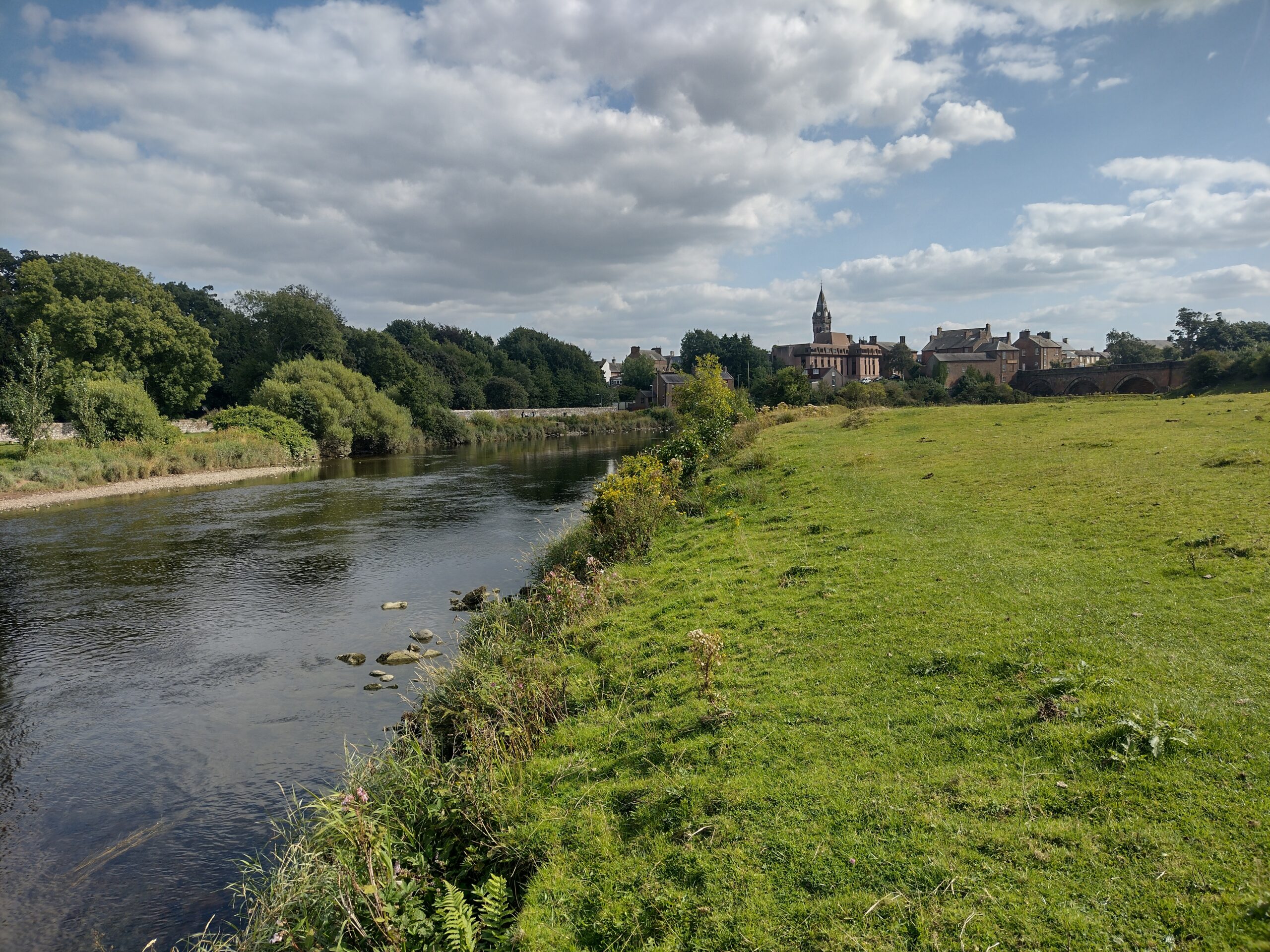
Just meters across the invisible border, the grass shone a vivid emerald; twice as lush as the fields and verges we’d sped past just moments before, and a world away from the crispy brown of the southern England summer.
‘You know why that is, don’t you?’ Mum huffed, as the first, light raindrops began their journey down the windscreen.
Mum had always wanted to visit Scotland, but for this holiday we’d had to compromise. I suffered terribly on long car journeys, and this was about as far as we could feasibly go without disaster. There were no mountains, nor waterfalls, nor any of the other wonders she had hoped to see, but we had a cheap room lined up in a neighbour’s Granny’s old-style B&B. We’d be kicked out after breakfast and not expected back until late afternoon, even if the day was a washout, which it frequently was. The flat farmland stretching in all directions was far from what we’d imagined but we embraced the change of scene. We had crossed into a country that none of us had visited before.
More than a decade later, when I arrived in the Northwest Highlands, I found what we’d been seeking much further south. No longer car sick, my world had expanded. As a child I hadn’t been impressed by Dumfries & Galloway, apart from the colour of the grass; but even then, I never made the mistake of confusing it with England.
On Hamid’s first visit, he made me pull off the dual carriageway to have his photo taken underneath the Welcome to Scotland sign. A handful of his Moroccan friends had been to the UK, but he didn’t know anyone with connections to Scotland. He was pioneering, and it was important to him. He also insisted on a kilt-wearing photo-shoot. He didn’t want to stay, of course, but that’s a separate story. He understood, and relished, the difference.
To Hamid, the South, North and Central Belt were all just Scotland. Of course, the landscape and local customs differ enormously from region to region. As in England, there are variations between dialects, delicacies, politics and lifestyles. When researching sketching spots for a new painting itinerary, I ventured further eastwards along the Moray coast than I’d ever been, and discovered spectacular coastlines, quaint harbours, fishing villages tumbling down cliffs reminiscent of Cornwall, and peaceful river walks amongst tall, broad-leaved woods which wouldn’t have a hope in the wild, salt-sprayed West. With the sunniest weather in Scotland and, at that time, far fewer tourists than we were flooded with, I mused on whether it might be the ideal place to live. Yet something just wasn’t right. Back in Lochinver, it came to me: it had simply felt too far the ‘wrong’ side of Inverness. At work in the pottery, someone asked how I’d liked the places I’d seen, and I tried to explain. Audrey just shrugged, as if it was obvious. ‘Well of course,’ she said. ‘You’re a West Coast girl.’
The day came that I needed to abandon the place I’d called home for so long. With nothing on my mind but freedom, I had little idea where I’d end up, and the plan was to have no plan, at least until I needed one. Two years later, with the pre-paid storage expired, I tentatively began to look for something to buy, primarily as a base, a bolthole, while I continued my lifestyle whizzing here and there which was something I wasn’t prepared to give up, having waited so long to achieve it. There were certain criteria this unknown place must possess before it could even be considered, but initially I was open minded about location.
The criteria
- Central to public transport hubs, preferably trains. I didn’t need a car sitting rotting while I was away. I’m still traumatised by the mushrooms growing in the back of my beloved Clio that I’d left in the ‘capable’ hands of both a friend and a mechanic. Cars don’t sit patiently in Scotland. Besides, I wanted to use public transport as much as possible, just like we all should.
- Storage. A shed, a garage, an attic or at least, two bedrooms to house my painting supplies and Moroccan rugs, ceramics and other artifacts in the hope of resurrecting that line of business in some form. In addition, a good storage space comes in handy if one decides to rent the place out in the future.
- Somewhere to paint. It’s been too long.
- Good light, lots of windows. This is a deal breaker for a forever home; I’d be happy in a greenhouse.
- An outside space big enough to have a cup of tea in the morning or a glass of wine in the evening. A forever home would need a proper garden area, but sadly wouldn’t be around enough for growing vegetables. I would need a seat in the sun, though.
- Beautiful surroundings within easy reach. Again, a forever home would need spectacular scenery right outside the door. No matter how temporary, there should be natural beauty on hand, or my mental health would take a nosedive.
- A friendly community in a peaceful, low crime area. I wouldn’t want to be worrying about break-ins while away, nor could I afford the insurance.
- Close to at least one good friend. Being more central would offer the chance to spend time with those I rarely see. Of course, I miss the ones I’ve left behind. So, if moving somewhere new, I’d need at least somebody I already know as a starting point.
- Somewhere to swim – a body of water, be it lake, river or (ideally) sea. If it was suitable for kayaking that would be even better. For a forever home, that’d be a given.
- Something that’s easy and cheap to heat. This means small, compact and cosy, which also implies lower council tax bills. As long as there was somewhere for a guest to sleep, even if just the couch.
- In a good state of repair and decoration, or so cheap I could afford to redo it. Damp was a no-no. Really, I was looking for somewhere I could move straight into.
- Wall space. I have a lot of paintings.
- A reasonable climate would be a bonus.
- Within my very modest budget. The toughest one of all. Many suggested it couldn’t be done – but I was determined to prove them wrong.
The thinking
Much as I’ve always wanted to live in a warm climate overseas, it simply isn’t practical at the moment due to Brexit, visa rules inside and outside of Europe and the fact I don’t have a steady income. Also, I have to consider how often I’m away and access to all the places I travel to. For now, the UK is the only option.
I began by identifying all the places I really like and could imagine living, not including the Northwest Highlands for many of the reasons on the conditions list. Places included:
The Yorkshire Dales. Of course, I feel very at home there, and pre-1986 moving to a barn conversion in a quiet village surrounded by moorland was a dream. One I will have to give up for good as I am not a footballer’s wife nor a lottery winner. It’s also a long way from the sea.
The Lakes. Never a serious contender, though during my brief interlude working near Keswick I did vote it possibly the most perfect place to live in England. Pretty, small, peaceful but lively. Rural but close to everywhere else. Very, very expensive.
Cornwall. My run-to place before I discovered the Highlands, Cornwall still lives in my heart. It’s a long way west, though. I’d be in the same, remote, boat. And more expensive again, unless I wanted a shack in Camelford. If you’re going to live in Cornwall, I think you need to be beside the sea.
Isle of Man. On my one visit I was taken enough with the place to research the possibility of moving there, given its independent status, in itself a definite draw. It is possible. But not on my budget. In addition, there’s the cost (and time) involved in the ferry crossing each time you want to access the ‘mainland’.
Arnside. After three wonderful, extended cat sits in Storth, a nearby village, I’ve become a bit entrenched. It has a gentle, old-fashioned air, and wonderful walks. It’s on a train line, enjoys a sunny micro-climate and is very nicely central. It has hills, (if small), quiet lanes, fairy glens and bird reserves. Beaches. The only drawback is you can’t swim from them. Remember the Chinese cockle pickers? And, once again, the price. I saw a fabulously situated mobile home for sale that I could just about afford. Due to its location, I was willing to overlook most of the reasons why a caravan isn’t the ideal home for me. What I couldn’t accept, however, was that it was not residential, and the monthly fees were huge. Who has £90,000 for holidays only? Some people do, apparently. Not I. There is also an alarming profusion of St. George flags waving inexplicably from ordinary people’s houses in this area so on further consideration, it had to be a no.
South coast. A small part of me considered returning to my roots. I’d always believed it to be completely out of the question, until I kept seeing flats in Eastbourne for under £100,000. Sadly, they were all retirement flats with just one bedroom and no individual outside space. The novelty of owning something in Sussex certainly appealed and it would be extremely convenient, too, for airports and ferries. But the sheer volume for sale at any given time hinted at the difficulty one may have reselling in the future. Besides, ‘retirement’ couldn’t be further from my mind.
Realising that if somewhere appears idyllic to me, the chances are it will also appeal to millionaires, the next step was to research which areas offered the cheapest housing options, and see if I could bear to live in any of them.
The search
I discovered that parts of the Northeast, which has a lot going for it in terms of scenery and friendliness, are among the cheapest in the UK. I have friends with a truly beautiful house in Darlington. I went to see them and was impressed, and surprised, by how central it was an easy to reach by train from all directions. However, as a big, busy and featureless place, it failed to persuade me.
I’d seen several cutesy-looking cottages at a very reasonable price in Bishop Auckland. The name sounds romantic and, although I’d never been, I imagined this small, quiet town would live up to this image. It didn’t. It honestly just seemed so…sad. It wasn’t only the rain.
It soon became apparent that I would have to compromise. Something at the low end of the housing market due, likely, to its size; an area that I liked but which wasn’t overly popular (or discovered, yet) or was on the edge of a lovely area, but slightly out in the sticks. I prefer the sticks and am always drawn to them. But at this stage they didn’t tick the centrality box, so there would need to be reliable public transport straight from the door.
In my wishlist on the Rightmove website I saved properties in Scarborough; Hawick; Campbeltown; Galashiels; Morayshire; Dunoon and Bute. I fell in love several times. A terraced cottage with roses around the door in Kilmartin, and another with wooden floors and a river at the bottom of the garden near Doune had me immediately reaching for the phone, but someone got there first, and both sold before I had the chance to see them. It was encouraging, though, to know it was possible: I could find something close to my budget that I loved, in a place I liked.
The process
In the end, I physically saw seven properties over the space of four months.
The first was a flat in a converted mill development on the outskirts of Carlisle, that most central of cities, with exposed brickwork in the open-plan living room; tall, arched windows and beautifully kept communal grounds with their own weir. I would have a swimming hole on my doorstep. I absolutely loved the flat, although the bathroom was miniscule and needed to be replaced. There were monthly upkeep fees, in common with many flats in England, but I was scrabbling around for possibility and justification for paying them. The development was tasteful, clean and quiet. As we drove away, towards the centre of town, there was an Indian takeaway on one side of the road and a shop proclaiming Cheap Booze on the other. I thought: This is the place for me! But, later that evening, back in beautiful Storth, a feeling of utter desolation washed over me. What on Earth was I thinking? I can’t live in Carlisle! I can’t live in any city. I’d rather pull out my nails with pliers.
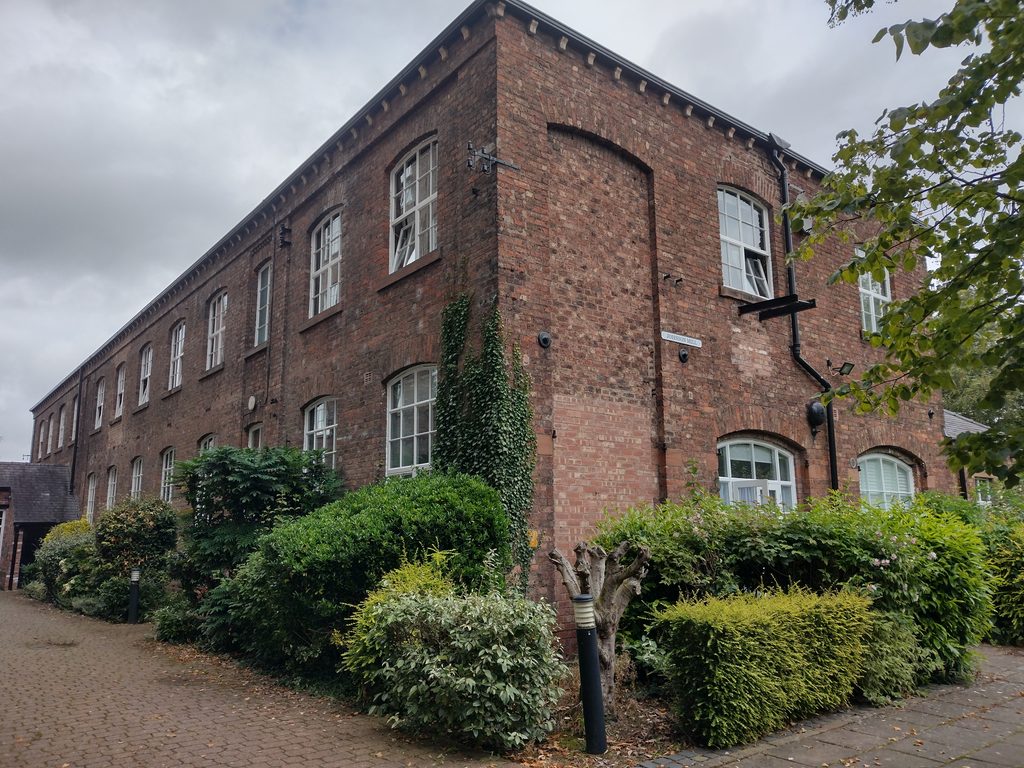
I kept the flat in my wishlist for a long time, for comparison purposes. If only it were somewhere else. It taught me a valuable lesson, however: location is, indeed, important.
Next was St. Bees, somewhere I knew of as the start – or end – of the Coast-to-Coast path, but never visited. On the map it was close, just a little way up the coast. Yet it took two trains, a bus and nearly three hours to reach it, which was not a great sign. But it’s a cute little place with a nice beach, apparently swimmable, if useless for a kayak. It’s surrounded by rolling hills and a good size, between large village and small town, with the all-important railway station.
I truly enjoyed my day out in St. Bees and would imagine it’s a great place to live. However, the house, which sported a useful small yard at the back, was miniscule. It was almost impossible squueze around the bathroom door, and the bedroom didn’t look large enough for a double bed, which you’d have had difficulty getting up the stairs in any case. I had been attracted by the box room as an ideal studio, and it might have been, if I hadn’t noticed the damp stains along the wainscot. It was at the top of my budget range but the smallest place I viewed. The agent sounded surprised when I gave a categorical no.
It now seemed that it was possible to find something that was lovely, within budget, and in a beautiful location…but it would be tiny. Or dilapidated. Or non-residential.
Decisions, decisions
I have loved my time cat sitting and visiting throughout England, and sometimes I barely notice that I’m in a different country. I soon feel at home wherever I find myself, whether or not I’d choose it as a place to settle. But there are very real differences in mentality and in governance, as I found out during a protracted, and absurd, interlude with the English NHS. Glimpsing a can of Irn Bru or hearing a Scottish accent may bring a nostalgic tear to my eye on occasion (not that I’m a fan of Irn Bru, you understand…) but it was almost certainly the frankly laughable difficulties I experienced trying to access prescriptions and appointments south of the border which convinced me on which side my bread was buttered. With vegan spread, naturally.
I had to narrow my search, if I was serious about finding somewhere other than a storage container to park my belongings, and myself on occasion. Once I decided it needed to be in Scotland, things began to fall into place.
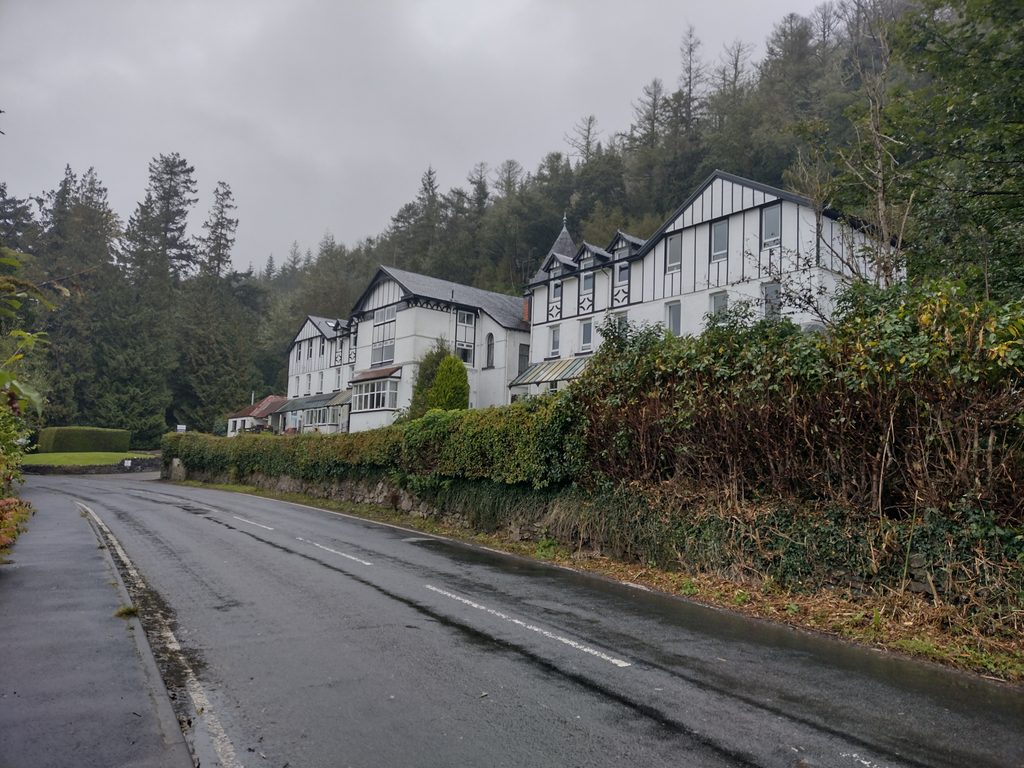
Although I’d initially poo-poohed the flat in a historic convalescent home beside the Holy Loch as being too remote (for now), I couldn’t stop thinking about it. Visiting my friend in Glasgow she suggested we go and take a look, and convinced me that Dunoon, the nearest place, was actually quite accessible from the city. We weren’t able to get a viewing at short notice, but we took two trains, hopped on the ferry and alighted from the bus directly in front of the unmistakeable white mansion, with rhododendron lawns sweeping down to the loch. The building was quirky, charming and a little spooky. It felt very familiar, but not in an entirely positive way; the roofs were covered with moss belying its status – as we were told by the cleaning lady we encountered – as the wettest place in Scotland. It looked in desperate need of more care than I would be able or willing to give it, and was much closer to the busy road than the photograph had pretended. I loved the atmosphere of the place and its lochside location. There was even a safe space for my kayak. But I had an overwhelming sense of déjà vu. An old Victorian building in a rain-sodden climate with a leaky roof? What was wrong with me?
We had a day out on the Isle of Bute. Now, we were getting warmer. Morag had suggested several years ago it might be my kind of place. She highlighted the close community, artistic vibe and shabby-chic settlements, its unspoiled nature and rural feel despite its proximity to Glasgow. Several small flats were currently for sale in Rothesay due, according to the estate agent we spoke to, to the new letting licence rules, with people offloading their Airbnb properties. Result! On closer inspection, the affordable properties were a bit run-down looking, and I would have preferred to be further out of town. Of course, the loveliest houses were much more expensive. However, after a second visit I can confirm that the Isle of Bute is firmly on the shortlist for a forever home, when I’m ready for one.
On reflection, both places were simply too far out for now. If I wanted West Coast and remote, why did I leave Lochinver in the first place? I stepped back, and waited for the answer to find me.
Closing the net
A friend in Kippford, a lovely village full of boats, has long tried to entice me down to her neck of the woods. Remembering my first visit to Dumfries and Galloway all those years ago, I was dismissive. I like Kippford, but it has never felt like ‘me’. Despite its proximity to the border it isn’t particularly accessible, either. Carole suggested I should look at Kirkudbright, the so-called artists’ town. So we did.
Here, by accident, I found the place which raised goosebumps. I immediately pictured myself in the flat, above its lovely garden, within the community and embracing the lifestyle. It was £20,000 below budget and although small, had heaps of potential. I was ready to sign. I swapped numbers with the friendly lady in the flat below and was truly excited by the prospect of moving in. Although Carole warned me that it wasn’t quite as convenient as I wanted – buses exist, but are slow and infrequent – for the first time I felt as if this was somewhere I could really be, not just come and go from.
Reading the home report was heartbreaking. The place needed a complete rebuild. With neither the time nor nerves for such an undertaking, I had to pull away. I remained keen on Kirkcudbright itself but most of the property was extremely overpriced and, as far as I could ascertain, lacking the same charm.
A tiny bungalow with a gorgeous garden and two functional sheds, was next on the list. In the pretty coastal village of Garlieston, this property would be a bargain for an investor or, ideally, a builder. It wasn’t for me, and Garlieston was far too remote, unless I was commuting to Ireland – it’s nearer to Stranraer than Dumfries – but I would have really loved the garden.
On my way back north I stopped to see a flat in an old, converted coaching inn, an attractive white building close to the river in the small settlement of Canonbie. On the map it looks to be ‘just off’ the A74, the main trunk road between Carlisle and Glasgow. I was driving, but the endless narrow lanes with deep potholes and slow-moving tractors made it feel like the middle of nowhere. There didn’t seem to be much there, either, when I finally arrived, and I got told off for parking in the front car park, when my own entrance was around the back. Not a very welcoming start.
The flat was really lovely. It didn’t have a lot of character, but was newly decorated and everything was shipshape. There were plush carpets, heavy curtains, all in neutral colours, and an attic ripe for conversion. There was only one bedroom, and the shared outside space was small. However, I would have given it serious consideration if I could have seen myself living in Canonbie. I’d passed a bus with ‘Carlisle’ on the front – on a Sunday, no less – but I couldn’t help imagining a frosty winter morning, hurrying to catch a train. It was a long way from friends as welI. I didn’t dismiss it out of hand; if I could have remodelled this flat with the brick walls of Carlisle and dumped it in Kirkcudbright with the Garlieston garden, it would have been perfect.
Ticking the boxes
From Canonbie, I drove back up to Sutherland for the summer. By the time I reached Lairg, Carole had sent me a link: ‘Have you seen this?’
I looked. I’d never heard of Annan, or if I had, it hadn’t registered. I looked that up, too.
A two bedroomed top floor flat with a small outside space and a garage. Nicely decorated and ready to move into. Exposed brickwork in the kitchen. A bath as well as a shower. Lots of wall space. A living room big enough to swallow my couch. A small town with some attractive old buildings. A river, just a mile from the sea. In a triangle between Lockerbie, Dumfries and Carlisle, with its own railway station. Just an hour from Carole in Kippford. I wouldn’t have a car – but she would. The only drawback the pancake-flat, featureless landscape around it; the same fields which wholly failed to inspire me on my first visit to Scotland which, if fate hadn’t intervened, might have been my last.
I looked at the listing, again and again. It was within budget, just. It ticked almost all the boxes. I told Carole I believed my soul would die if I lived there. She responded by sending me pretty pictures of places that I won’t reach without a car. Perhaps I could buy a bike. As I keep reminding myself – I’ll spend more time away than at home.
I viewed the flat. It felt like home. Not in an awestruck, Carlisle flat way. Not in a goosebump Kirkcudbright way. Not even in an appreciative Canonbie way. In a yes, I can see myself living in it, kind of way.
Annan has an Aldi, at least one decent pub (as far as my investigations have gone so far), a well-stocked hardware shop and a path along the river. The all-important railway station is five minutes’ walk from my flat. Everyone I have met has been welcoming and friendly. There are possibilities here too many to list; I am sure this is the right place to be for the next phase of my life.
And yet.
On hearing me speak, people keep asking me where I’ve moved up from? The assumption is I’m just another English refugee, a White Settler crossing over to where the grass is, indeed, greener. The reality is that I’m more of a Highlander than they’ll ever be, at least in my heart, if not my voice.
There’s an old song by Runrig, who often sang about the Clearances and the exile of Gaelic speakers, which makes a clear distinction between the Highlands – the lands of the Gael – and other parts of the country. Obviously, I’m not a Gael. I wasn’t even born in Scotland, as evidenced when I open my mouth. But after forty years of truly belonging to a place, it’s hard to imagine an alternate identity.
…The Lowland Scot with English habits
Has brought me to his lowland manners.
Oh, I do believe
Dust will turn the seed
Home.
No, they can’t understand
The hole that is in my heart.
Oh, I do believe
Dust will turn the seed
Home.
I’ve lived my life here with the others;
I long to live with you, my brothers.
Oh, I do believe
Dust will turn the seed
Home…
(Runrig, 1981)
I’ve had the strangest feeling ever since I decided to lay my hat down South, that I’ve been struggling to articulate.
My travels have taken me to parts of the world as geographically, visually and culturally distant as it’s possible to be on Planet Earth. Yet even when I left with the intention of beginning a new life – in Morocco, Langkawi, Sri Lanka – in my heart I always knew where Home was. Exactly where I left it, waiting for me.
I’ve made sure I’ve remained in Scotland. And yet, weirdly, I’ve never felt further away.
Listening to an interview with an exiled Palestinian woman I picked up the line, ‘Home isn’t a place you remember. It’s the place you’re remembered.’ Don’t forget me, my Highlands. One day, I am sure, this West Coast Girl will be heading home.
MacDonald, C. (1981). Dust. Pencaitland: Ridge
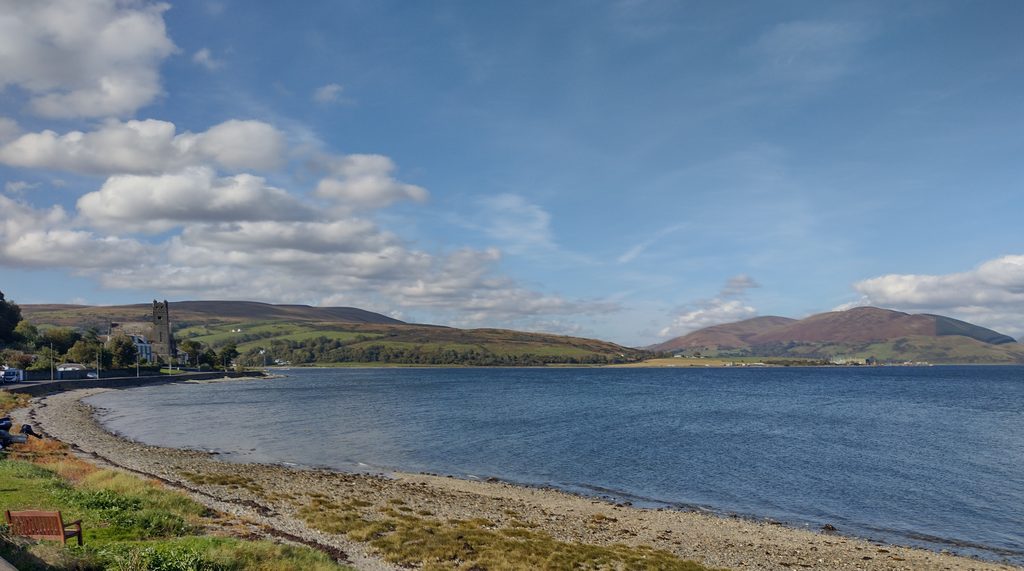
Isle of Bute